
The 100th Separate Mechanized Brigade: The Men Who Fight Where No One Wants To
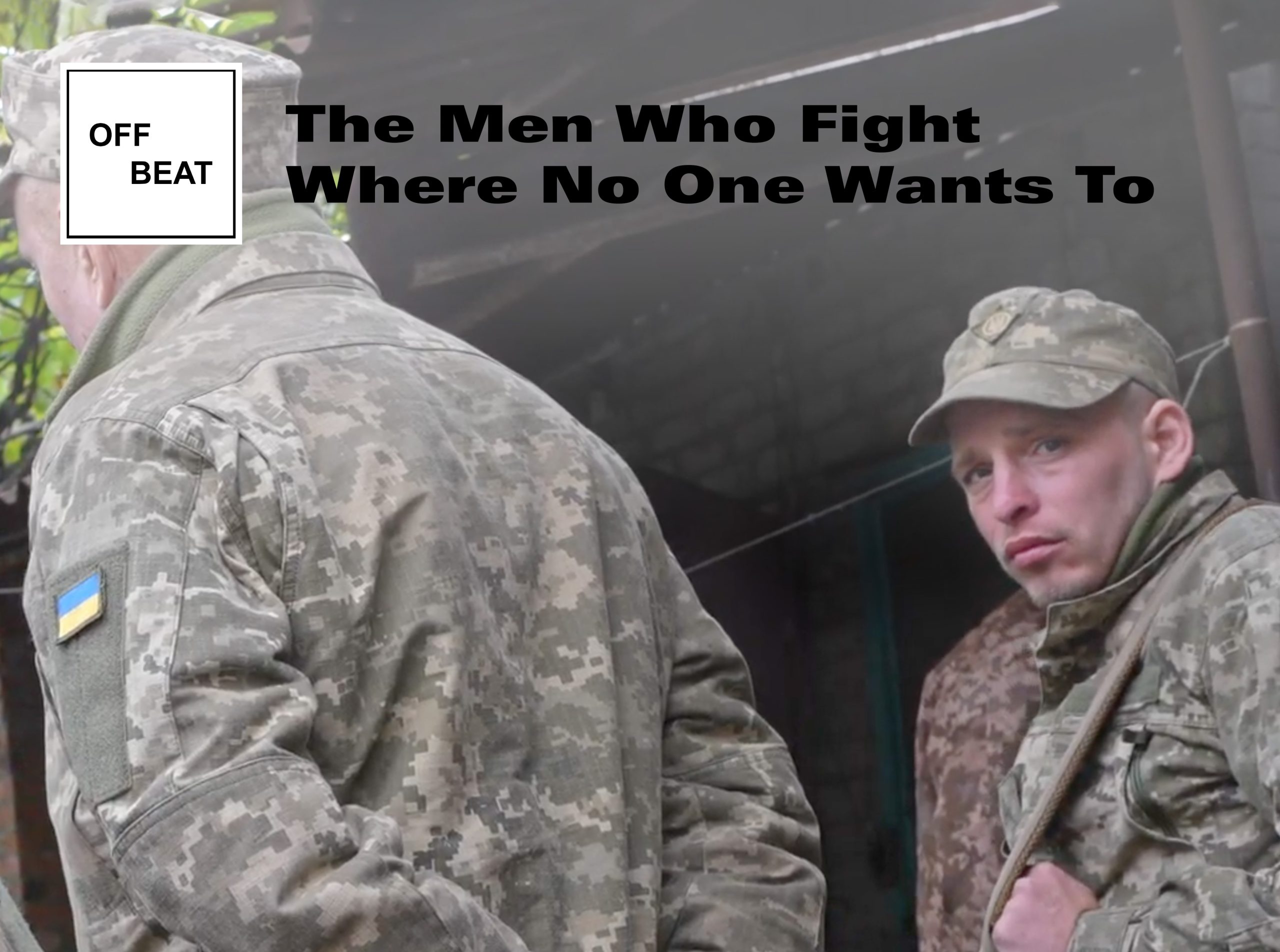
Most men know the dangers of the job — of holding a dugout in eastern Ukraine. That’s why almost nobody wants it. Still, the 100th Infantry is positioned here, on the Kostyantynivka axis, despite the costs.
The stories of how these men ended up here are varied, as are their backgrounds. Yet they still stay and fight.
Most of the men I spoke to on this front are conscripts. This is also true for the majority of the men who joined up recently; around 80 percent of them have been conscripted according to ‘Flint’, an infantry platoon commander in the 100th Infantry who agreed to be interviewed for this piece.
Flint — a callsign assigned to him by command — had been transferred from an airborne assault brigade to his current unit after being wounded and discharged on the Soledar-Bakhmut front, where he previously served as a combat medic before being promoted to his current role as chief platoon sergeant. It’s a job which, he says, he ended up getting because no one else was available to fill the role.
I spoke to Flint in the lull between combat missions, while watching men gear up for their turn on the front.
DYLAN BURNS: Where were you wounded?
FLINT: Which one? There was more than one. The first wound I received was during a mortar shelling. My right hand was pierced. The motor functions in my right hand have been irreparably damaged.
What’s it like defending this part of the front?
It’s best to approach such a question systematically, because the nature of battles changes daily. Generally, any battle or combat operation is bad. But if we’re talking about now specifically… Comparing what’s going on now and what was happening four months ago [in late 2025], it’s a completely different type of war. Drones are the biggest threat to everything – Including infantry, logistics, artillerymen, [and] fire support. Drones also pose a threat to other drones.
What are the biggest dangers your team faces?
Getting to the position is most dangerous. The road takes the lion’s share of the danger. The fact that you’re moving and exposed. There are some areas where you have to drive out in the open without any cover. Without any brush. Being at a position is also not fun. I would say that in most cases, it’s generally a bit safer than the road to the position itself. Logistics have become more complicated. Honestly, most of the recon is done by drones. Can I say the word ‘fags’? [Russians]. If in the past the fags hadn’t developed their drones technology as much, now, whenever they concentrate their forces on a certain axis, they suppress any movement with FPVs, bombers, grenade drops, and small Mavic [drones]. They use them to destroy fortifications, to suppress any movement. Things are difficult.
How would you describe [the new tactic of] Russian infantry offensives primarily using small infantry teams [to penetrate frontline areas]?
There’s a new term for this: infiltration. They sneak through, one or two at a time, in anti-thermal cloaks, often under the cover of night. And sometimes in the middle of the day through an open field, hoping they don’t get spotted.
I want to send a message to the people that like to sit at home and say that the Russians are ‘idiots, orcs, pigs, pig dogs’, and whatever else they call them. It’s not like that at all. They’re also people, and they’re also learning. They just need to make a few more mistakes before they learn. But they’re learning. They of course know that they’ll suffer more losses in a massive mechanized assault than in these infiltrations, even though we’re actively trying to spot and suppress these infiltrations while they’re still on the approach. Plus, they have very active recon in captured and occupied areas. They try to find maps. They start looking for pipelines and places with the least risk possible. There have been operations where they snuck through water pipelines, through ammonia pipelines, through gas pipelines. They use all means available to achieve some kind of success.
How difficult has it been to evacuate injured soldiers on the front?
In general, evacuations are very difficult now. In some cases it’s impossible. But we try to do all we can to evacuate the wounded, to recover the dead to return them to their families for burial. The time of day doesn’t matter at all.
Does it depend on weather conditions?
Weather conditions only affect drones on the front line. It could be either pouring rain, or fog. Anything else that doesn’t affect the drone mechanically, like water or humidity making it harder to take off or causing a technical failure, you can count on drones being in the air.
Some foreign commentators say drones decrease the need for frontline infantry to hold forward positions, suggesting that drone swarms can plug the holes.
I don’t agree. How should I put it? If there’s no physical presence of soldiers at a position, then it’s not your position. You don’t know what the situation on the ground is like [by using drone swarms], what’s going on.
Drones provide a lot of information, but they’re not going to paint a perfectly clear picture. If there’s any cover in the way, no drone is going to tell you what or how many [soldiers] are down there. If we’re being honest… If we’ll live to a time when Terminators become real, only then could we talk about completely replacing infantry with Terminators.
What is the nature of Russian prisoners of war (POWs) at this stage in the war?
Right now, I think the lion’s share of POWs comes from [soldiers] trying to infiltrate. Those who made it past our positions into the rear. And of course, sweep teams are sent to capture them. POWs are still being captured; there are POWs after every sweep. But a lot of [enemy infantry] are eliminated because they don’t want to get captured. If we’re being honest, a lot of them are eliminated because once they reach the enemy’s rear, they know an enemy sweep team is coming after them, so they try to fire back. Our guys aren’t exactly eager to show mercy after being shot at.
All the POWs we’ve captured were people they were able to conscript, people they were able to lure into signing a contract. All of those get captured by us.
To what extent do Russian [forces] try to flank and envelop your positions?
Based on past experience in Soledad, Bakhmut, Avdiivka… Whenever they tried to attack and clear a city directly, they suffered a lot of losses. Now they try to go around. Not discounting the sabotage and recon groups they send to sabotage logistics, or to attack a position, or to ambush someone. It varies. Of course, these groups are countered. Sweep teams are sent after them. But they mainly focus their forces on circumventing [urban areas].
To what extent do you receive support or assistance from civilian volunteers?
I ask volunteers for help in getting really basic necessities. They procure really basic things like home-baked goods, hygiene products like tissues and so on. There are other volunteers who get us things like spare parts for the cars, [like] tires, and even the cars themselves.
Personally, I don’t have contact with [volunteers]. I don’t know about the rest, but personally, I’ve never initiated any fundraising. Whenever we need anything, like our car needs fixing or we need specific equipment, like Starlinks for example, a power supply like a generator or a charging station, we just pool our money together and buy it.
Is there a big divide between military servicemembers and civilians away from the front line?
Yes, of course. It’s hard to answer this question. Seeing that you took out a fag, being away from home for so long. Let me put it this way… Right now in the media, a lot of armchair generals have popped up who try to analyze things without knowing the full picture. They have a general approach to the situation on the front line. But if you focus on specific axes, things are completely… Civilians just can’t comprehend how the country is being defended. They only know what they’re told by the media, which fairly significantly downplays what’s going on.
Will they ever understand the situation?
I really can’t say. Of course, they have to be here to fully understand the situation. They have to see it with their own eyes. Just showing it won’t do it justice.
Anything else you’d like to say?
My motivation has been, and always will be… I’m not just defending my country, I’m defending my home. After seeing what’s happening here, I’d never want to see it happen to Volyn oblast, my home oblast. What else can I say? I’d like to address Ukrainian citizens. If you’re middle-aged, if you’re physically fit, and ready to look death in the eye for the great goal of defending your home, please, come. We’re happy to welcome you all.
